
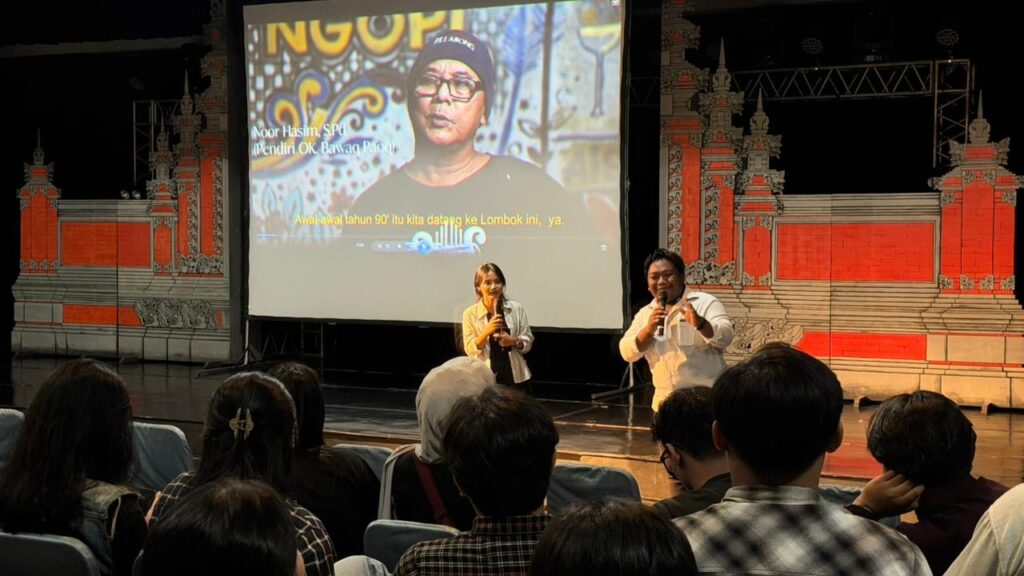
YOGYAKARTA — The Ethnomusicology Department successfully held the “Layar Nada” festival, a space for appreciation, reflection, and documentation of music documentaries highlighting the richness of Nusantara traditions. Held for three days from May 11-13, 2026, at the Mini Concert Hall, this event was a tangible testament to the application of ethnomusicology, where academic knowledge does not merely remain within the lecture hall but directly impacts the community.
Over the three-day festival, a diverse selection of 12 music documentary films were successfully screened to the public, with four films presented each day. Each work shown was the result of in-depth research and production by ethnomusicology students. Through a humanistic approach, they succeeded in exploring and documenting the diversity of musical practices in Indonesia, while also reflecting the spirit of a “campus with impact” that integrates scientific knowledge with the real needs of local communities.
The first day of the festival was marked by the historic moment of launching a master archive book titled “Grassroots Maestro: The Untold Stories of Women Keepers of Tradition.” This book specifically documents the stories of women who form the backbone of local music tradition preservation but are often overlooked by official historical records. The agenda for the first day concluded with the screening of four premiere music documentaries, which were attended by the general public and the academic community.
Entering its second day, the festival launched a digital platform in the form of an archiving website for Hasan Bahasyuan's musical works. This platform is designed to preserve and disseminate the maestro's musical legacy so that it remains protected for future generations, while also serving as a bridge of appreciation between the musical treasures of the past and the modern public. Along with the launch of the platform, four other music documentaries were also screened.
The official festival rangkaian concluded on its third day with the screening of the final four music documentaries as the main event. This closing session also included an interactive discussion and reflection between filmmakers, researchers, and the audience regarding the crucial role of documentation in preserving Indonesia's cultural heritage.
Through the success of Tone Screen, the Ethnomusicology Department reaffirms its commitment in three main areas: making academic research a tangible instrument for cultural preservation, opening access to the university's music archives to the wider public, and recognizing tradition bearers—especially women—whose roles are often marginalized. This initiative proves that the output of educational institutions can deliver real social, cultural, and scientific impact, extending beyond mere fulfillment of formal academic requirements.


 EN
EN  ID
ID